



Case Studies: Successful Implementation of Induction Hardening Furnaces for Enhanced Industrial Performance
Release time:
2025-09-24
Case Studies: Successful Implementation of Induction Hardening Furnaces Table of Contents 1. Introduction to Induction Hardening Furnaces 2. Understanding Induction Hardening Technology 3. Benefits of Induction Hardening Furnaces in Industrial Applications 4. Overview of Case Studies 5. Case Study 1: Automotive Component Manufacturer 6. Case Study 2: Aerospace Parts Produc

Case Studies: Successful Implementation of Induction Hardening Furnaces
Table of Contents
- 1. Introduction to Induction Hardening Furnaces
- 2. Understanding Induction Hardening Technology
- 3. Benefits of Induction Hardening Furnaces in Industrial Applications
- 4. Overview of Case Studies
- 5. Case Study 1: Automotive Component Manufacturer
- 6. Case Study 2: Aerospace Parts Production
- 7. Case Study 3: Heavy Machinery Manufacturing
- 8. Key Findings and Insights from the Case Studies
- 9. Future Trends in Induction Hardening Technologies
- 10. Conclusion
- 11. Frequently Asked Questions
1. Introduction to Induction Hardening Furnaces
Induction hardening furnaces have revolutionized the manufacturing landscape by providing a precise and efficient method for hardening metal components. This technology utilizes high-frequency electrical currents to generate heat, enabling rapid and uniform heating of metal parts. The implementation of induction hardening furnaces is crucial for industries aiming to enhance their product durability and performance, leading to increased competitiveness in the market.
In this article, we explore successful case studies that illustrate how various industries have effectively integrated induction hardening furnaces into their operations, showcasing both the challenges faced and the remarkable outcomes achieved.
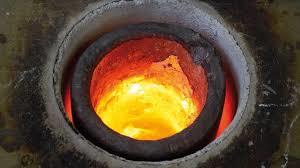
2. Understanding Induction Hardening Technology
Induction hardening is a heat treatment process that selectively hardens the surface of ferromagnetic metals without affecting the core. This process is accomplished through several key steps:
- **Induction Coil Setup**: The workpiece is placed within an induction coil that generates an oscillating magnetic field.
- **Heating Process**: When electrical current flows through the coil, it creates eddy currents in the metal, rapidly heating its surface to the desired temperature.
- **Quenching**: The heated metal is then rapidly cooled, typically in water or oil, which transforms its microstructure and increases hardness.
This method allows for the hardening of specific areas of a component, providing tailored mechanical properties essential for performance in demanding applications.
3. Benefits of Induction Hardening Furnaces in Industrial Applications
Utilizing induction hardening furnaces offers numerous advantages for industries, including:
- **Improved Hardness and Strength**: The process enhances the wear resistance and fatigue strength of components, extending their operational lifespan.
- **Energy Efficiency**: Induction heating is efficient and environmentally friendly, reducing energy consumption compared to traditional methods.
- **Reduced Cycle Times**: The rapid heating and cooling processes achieve hardening in a fraction of the time, increasing production throughput.
- **Precision Control**: The technology allows for precise control over the heating process, ensuring consistent quality and minimizing waste.
- **Versatility**: Induction hardening can be applied to various shapes and sizes, making it suitable for an extensive range of components across different industries.
4. Overview of Case Studies
The subsequent sections present in-depth analyses of three notable case studies where induction hardening furnaces have been successfully implemented. Each case highlights unique challenges, solutions, and the resultant benefits, providing valuable insights for manufacturers considering this technology.
5. Case Study 1: Automotive Component Manufacturer
In the automotive sector, a leading manufacturer faced challenges with the durability of its transmission gears. The existing hardening process was inconsistent, leading to high failure rates during testing.
**Solution**: The manufacturer transitioned to an induction hardening furnace, allowing for precise control over the heating and cooling cycles.
**Results**: Post-implementation, the failure rate dropped significantly by 70%. The gears exhibited enhanced wear resistance and improved overall performance, contributing to a more reliable automotive transmission. Additionally, manufacturing efficiency improved, reducing cycle times by 30%.
6. Case Study 2: Aerospace Parts Production
An aerospace components manufacturer was seeking methods to enhance the fatigue strength of critical engine components. Traditional hardening methods proved inadequate, resulting in excessive rework and high production costs.
**Solution**: The introduction of induction hardening furnaces provided a solution. The process was tailored to harden specific sections of the components while maintaining core toughness.
**Results**: The implementation led to a 50% reduction in rework and scrap rates. Components produced exhibited superior fatigue resistance, contributing to safety and reliability in aerospace applications. Moreover, the energy consumption of the hardening process decreased by 25%, leading to cost savings.
7. Case Study 3: Heavy Machinery Manufacturing
A heavy machinery manufacturer struggled with premature wear on critical hydraulic parts, impacting operational efficiency. The existing hardening process was labor-intensive and inconsistent.
**Solution**: By adopting induction hardening technology, the manufacturer achieved a uniform hardening of the hydraulic components that minimized wear.
**Results**: The longevity of the parts increased by 60%, leading to fewer replacements and repairs. Production rates improved due to decreased downtime, and the overall cost of ownership for machinery was significantly lowered.
8. Key Findings and Insights from the Case Studies
The analysis of these case studies reveals several common themes and insights:
- **Enhanced Performance**: Transitioning to induction hardening furnaces led to marked improvements in the mechanical properties of components across various industries.
- **Cost Savings**: The efficiency and effectiveness of induction hardening resulted in decreased production costs and improved profit margins.
- **Increased Reliability**: The consistency and precision of induction hardening processes contributed to improved reliability of parts, particularly in critical applications such as automotive and aerospace.
- **Sustainability Benefits**: The reduction in energy consumption and waste associated with induction hardening furnaces aligns with sustainability goals, a growing priority for many manufacturers.
9. Future Trends in Induction Hardening Technologies
As industries continue to evolve, the future of induction hardening technology looks promising. Key trends include:
- **Integration with Industry 4.0**: The adoption of smart technology and IoT will enhance monitoring and control of induction hardening processes, leading to further efficiencies.
- **Customization**: Tailored hardening solutions will cater to specific component requirements, improving performance in niche applications.
- **Sustainable Practices**: Ongoing developments will focus on reducing environmental impact, making induction hardening more sustainable through energy-efficient practices and materials.
10. Conclusion
The successful implementation of induction hardening furnaces has transformed manufacturing processes across various industries. The case studies discussed highlight significant improvements in product durability, manufacturing efficiency, and cost-effectiveness. By adopting this advanced technology, manufacturers can not only enhance their product offerings but also gain a competitive edge in the market. As industries continue to embrace innovation, the future of induction hardening technology is set to play a pivotal role in shaping the next generation of industrial performance.
11. Frequently Asked Questions
1. What is induction hardening?
Induction hardening is a process that uses induction heating to harden the surface of ferromagnetic materials without affecting the core. It involves rapid heating followed by quenching to enhance hardness and durability.
2. What are the main advantages of using induction hardening furnaces?
Key advantages include improved hardness, energy efficiency, reduced cycle times, precision control, and versatility in application across various industries.
3. Can induction hardening be applied to all types of metals?
Induction hardening is primarily effective on ferromagnetic metals, such as steel and iron. Non-ferrous metals may require different hardening methods.
4. How does induction hardening compare to traditional hardening methods?
Induction hardening is generally faster, more energy-efficient, and allows for greater precision in hardening specific areas of a component compared to traditional methods.
5. What industries benefit from induction hardening technology?
Industries such as automotive, aerospace, heavy machinery, and manufacturing of industrial components benefit significantly from induction hardening due to enhanced durability and performance of critical parts.
By harnessing the power of induction hardening technology, manufacturers can elevate their production capabilities, ensure product reliability, and position themselves for success in a competitive marketplace.
Contact Us
TEL:+86 13503880562
Email:sales@cnmelt.com
Website: https://www.cnmelt.com/
WeChat/WhatsApp: +8613503880562
Add: Luoyang City, China
QR code
Copyright © Luoyang Ruixinsheng Industrial Technology Co., Ltd.
